
Thermal Engineering
Research Area
Thermal Engineering
The Thermal Engineering Group conducts extensive research on next-generation energy conversion and utilization. 1) Development of high-efficiency/environmentally-friendly internal combustion engines, gas turbines, and hybrid systems, 2) experimental and numerical studies on combustion and chemical kinetics of alternative fuels, 3) development of environmentally-friendly heat pumps for both heating and cooling, and 4) life-cycle analyses of greenhouse gases from energy uses have been the primary research focuses of the group. In addition, interdisciplinary studies employing micro/nano and energy technologies and utilizing graphene and nano fluids are ongoing as well to acquire core technologies in the fields of nano-scale photon and molecular energy. These cutting-edge interdisciplinary studies will facilitate the developments of future solar cells and fuel cells that can compete with current high-energy density fossil fuel energy systems.

Computer Aided Thermal Design Laboratory
Prof. Kim, Charn Jung
The Computer-Aided Thermal Design Lab conducts research using Multi-Scale Multi-Dimensional (MSMD) modeling techniques to predict the performance and lifespan of lithium-ion batteries (LIBs) and to develop micro/CFD analysis models for efficient simulation of solid oxide fuel cells (SOFCs).
The lab focuses on the precise analysis of thermal and fluid flow behavior in various energy systems, including fuel cells and batteries, with the goal of advancing performance-driven design and optimization technologies.
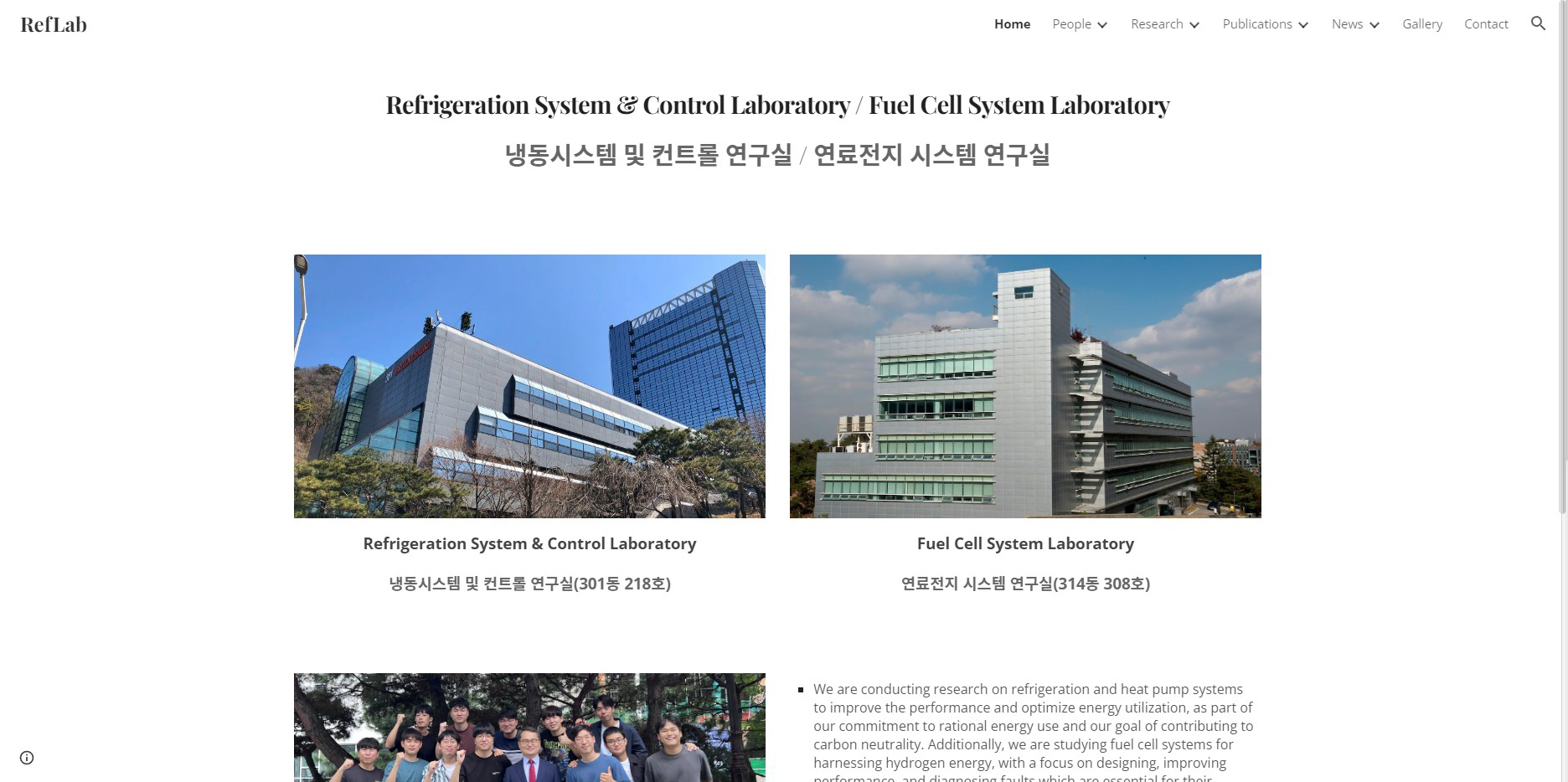
Refrigeration System & Control Laboratory / Fuel Cell System Laboratory
Prof. Kim, Min Soo
The Refrigeration System & Control Lab / the Fuel Cell System Lab focus on improving energy efficiency and advancing carbon neutrality through research on high-performance refrigeration and heat pump systems, as well as energy optimization technologies.
We also develop technologies for the design, control, and fault diagnosis of fuel cell systems powered by hydrogen energy, aiming to establish a reliable foundation for next-generation eco-friendly energy systems.
In addition, our research includes thermal management of electric vehicles, enabling quantitative analysis of onboard energy flows and the development of strategies to reduce auxiliary power consumption, thereby extending driving range.
SNU Automotive Laboratory
Prof. Min, Kyoungdoug
The SNU Automotive Laboratory conducts experimental and analytical research aimed at enhancing the performance, efficiency, and durability of next-generation automotive powertrains, focusing on batteries, hydrogen engines, and fuel cells.
In the field of batteries, we analyze the performance variations of pouch cells under different cooling methods, carry out durability testing, and develop foundational safety technologies through modeling and analysis of thermal runaway mechanisms.
For hydrogen engines, our research centers on optimizing hydrogen combustion using a single-cylinder engine, along with the development of water injection techniques to reduce NOx emissions. In the area of fuel cells, we focus on dynamic modeling of fuel cell electric vehicle (FCEV) systems to predict fuel cell lifespan and establish optimal operational strategies.

Wearable Soft Electronics Lab
Prof. Ko, Seung Hwan
The Wearable Soft Electronics Lab focuses on developing next-generation wearable systems based on flexible and stretchable electronic devices and soft robotics. Their research includes skin-attachable electronics (e-skin), implantable biomedical devices, and soft robots.
The lab explores a wide range of applications, including brain-machine interfaces (HCI/HMI), bio-interfaces, energy devices, and environmental sensors. To achieve this, the lab utilizes advanced functional materials such as nanomaterials, liquid metals, and transparent electrodes, along with nanofabrication techniques.
Furthermore, the lab is focusing on integrating AI-based signal processing and automation technologies to create intelligent wearable platforms for real-world applications in biomonitoring, healthcare, and environmental sensing.’
Advanced Energy System Laboratory
Prof. Song, Han Ho
The Advanced Energy System Laboratory researches energy systems for next-generation eco-friendly vehicles, focusing on fuel cells, hybrid systems, and electric vehicle energy management. The lab develops technologies for high-efficiency, low-emission driving, including fuel cell powertrains, lean-burn hybrid optimization, and AI-based energy control for electric and hydrogen vehicles.
We also study hydrogen production, fuel characteristics, and life cycle assessment (LCA) to support the design of sustainable and environmentally sound energy systems.
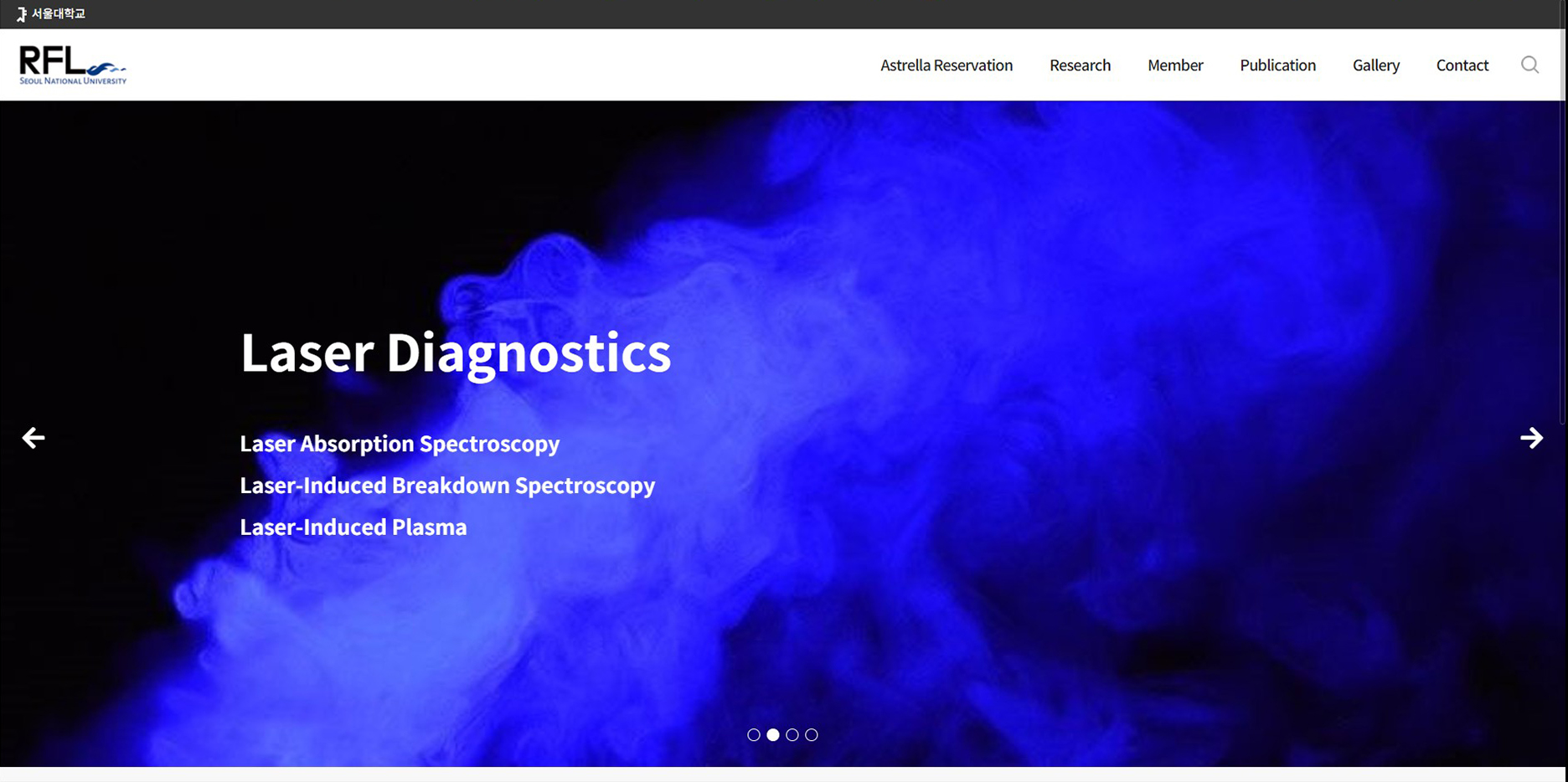
Reacting Flow Laboratory
Prof. Do, Hyungrok
The Reacting Flow Lab focuses on developing laser-based diagnostic techniques to quantitatively analyze combustion and flow phenomena under high-temperature and high-pressure conditions.
The lab applies advanced optical methods—such as Tunable Diode Laser Absorption Spectroscopy (TDLAS), Laser-Induced Breakdown Spectroscopy (LIBS), and Laser-Induced Plasma (LIP)—to non-invasively measure temperature, pressure, and chemical composition in extreme environments, including supersonic combustors and high-pressure flames.
These diagnostics enable us to investigate combustion instabilities and control high-speed flows, contributing to the development of next-generation propulsion and high-efficiency energy systems.
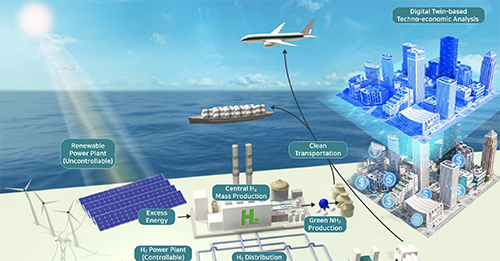
Clean Energy & Nanoheat Laboratory (CLEAN Lab.)
Prof. Park, Sangwook
at spans both short- and long-term innovation, aiming to deliver transformative technologies when humanity needs them most.
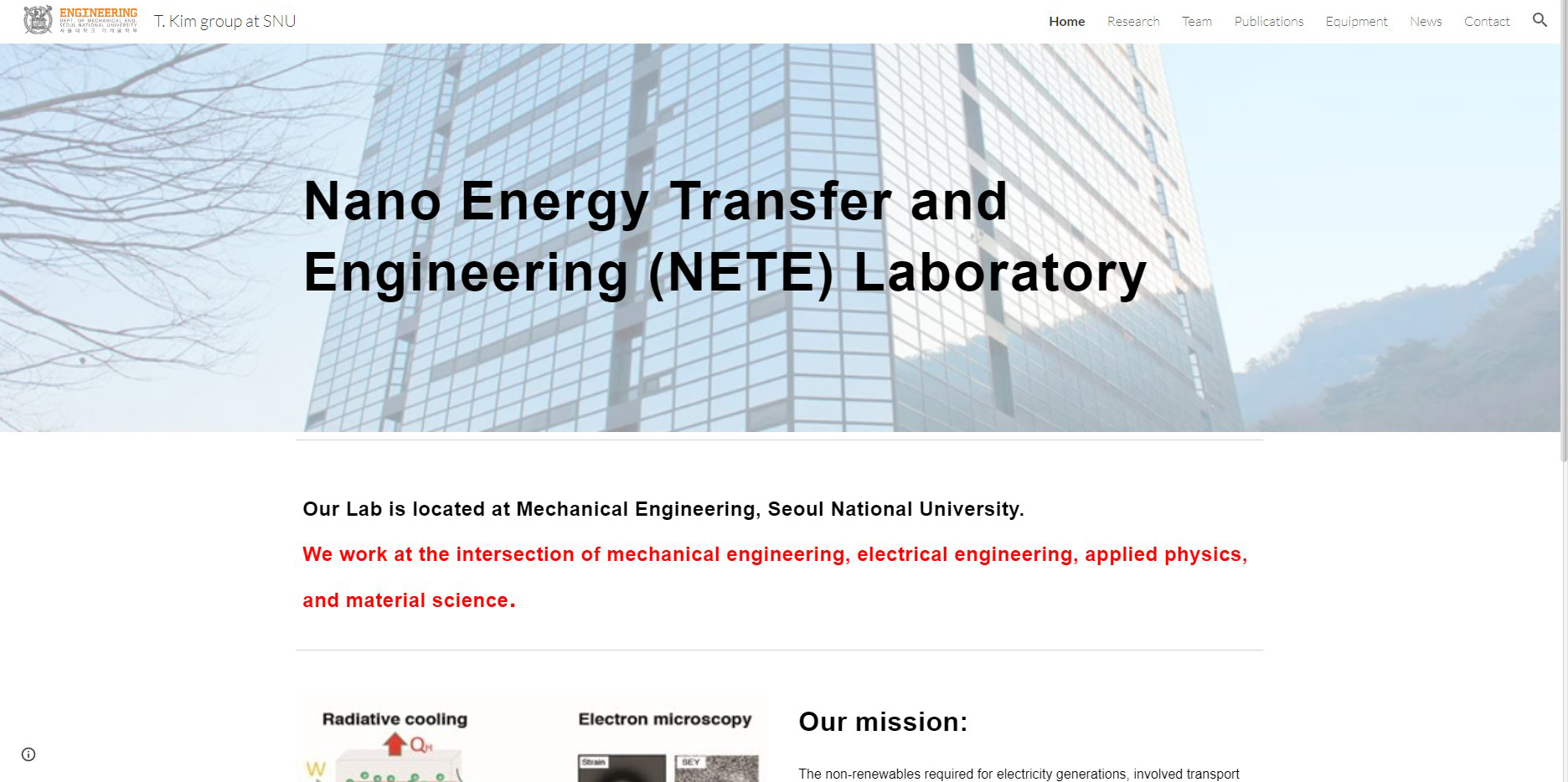
Nano Energy Transfer and Engineering Lab
Prof. Kim, Taeyong
The Nano Energy Transfer and Engineering Lab develops high-efficiency energy materials and devices based on a fundamental understanding of energy transfer phenomena.
Researches aim to minimize inefficient energy losses—such as low-grade waste heat in conventional systems—by precisely analyzing the microscopic transport behavior of energy carriers such as phonons, electrons, and excitons.
Using optical spectroscopy and ultrafast electron microscopy, the lab quantitatively investigate heat and electron transport in inorganic and organic materials.
The lab explores various nanoscale energy control technologies, including radiative cooling, thermoelectric conduction, and optical carrier imaging, to advance next-generation energy utilization strategies.
Turbulence, Flow Control and CFD / Bio-Mimetic Engineering Laboratory
Prof. Choi, Haecheon
The Turbulence, Flow Control and CFD / Bio-Mimetic Engineering Lab conducts high-fidelity simulations (DNS, LES) to accurately predict turbulent flows and understand underlying physical phenomena. Based on this, the lab develops effective flow control strategies and are actively exploring machine learning approaches for turbulence prediction.
The lab also applies bio-mimetic design principles, inspired by natural forms and functions, to develop technologies such as low-noise fan blades, low-friction excavation tools, and aerodynamically efficient vehicle shapes across various engineering fields.
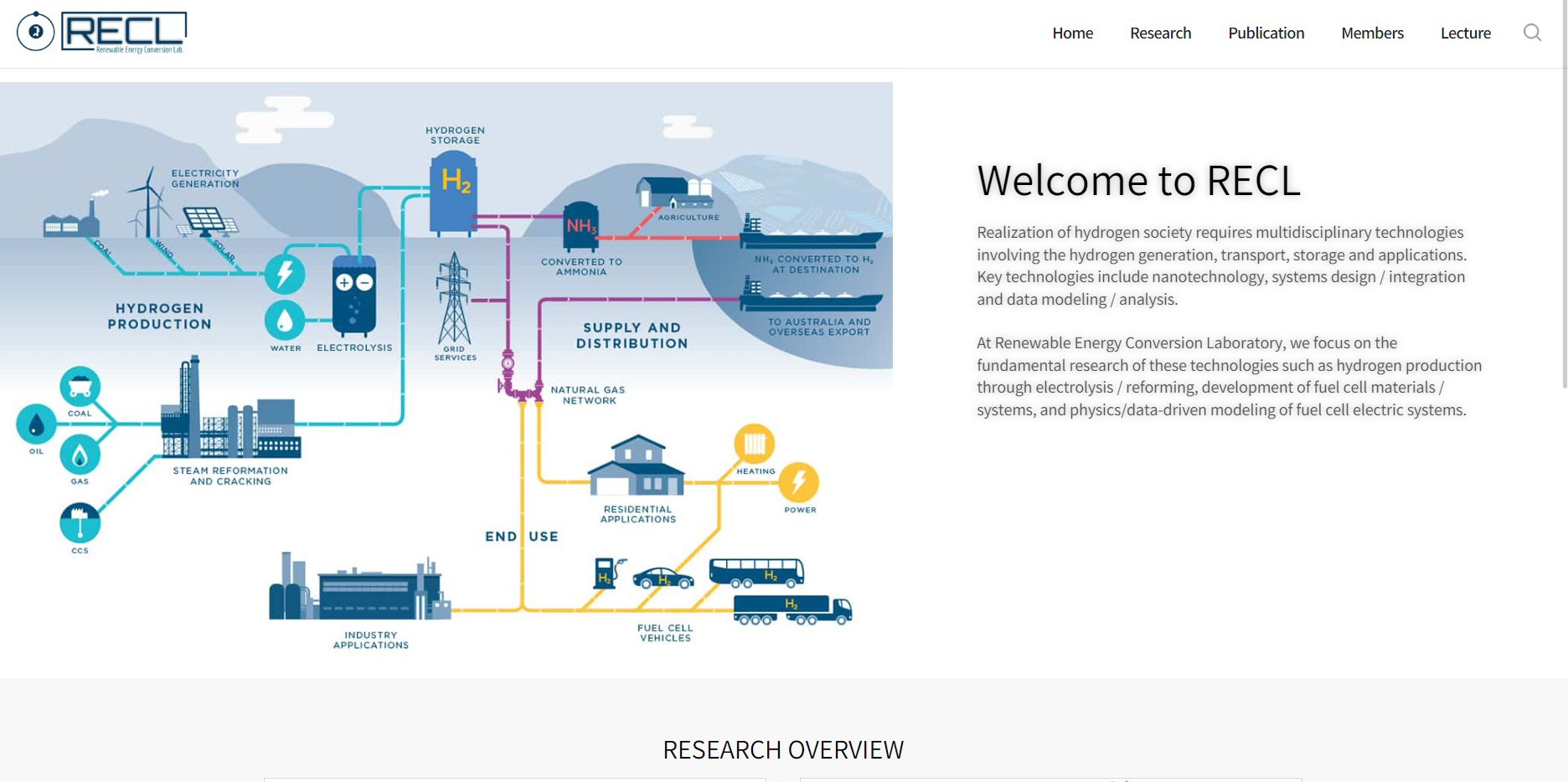
Renewable Energy Conversion Lab
Prof. Cha, Suk Won
The Renewable Energy Conversion Laboratory (RECL) focuses on building sustainable hydrogen energy systems by combining electrochemical energy conversion, nanomaterial engineering, and data-driven design.
The lab develops electrocatalysts and energy materials using nanothin-film fabrication, and conduct electrochemical analysis of water electrolysis and fuel cell systems to enhance efficiency and durability.By integrating physics-based models with machine learning, they aim to predict and optimize system performance under real-world conditions—supporting the future of clean energy and hydrogen-powered mobility.
Multiphase Flow and Flow Visualization Laboratory
Prof. Park, Hyungmin
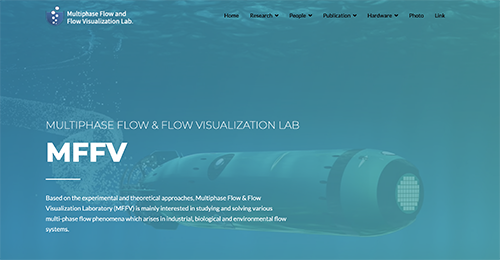
The Multiphase Flow and Flow Visualization Lab aims to quantitatively understand and address the physical mechanisms of complex multiphase flow phenomena occurring in industrial, biological, and environmental systems.
By combining advanced experimental techniques—such as high-speed imaging, Particle Image Velocimetry (PIV), and shadowgraphy—with numerical simulations, theoretical modeling, and machine learning algorithms, the lab investigates phenomena such as bubbly flows, particle-fluid interactions, and flow control on functional surfaces.
The lab also conducts experimental and theoretical studies in diverse applications, including the hydrodynamics of bio-inspired robots, droplet behavior in semiconductor cleaning processes, and particle dispersion in environmental flows, contributing to the design and control of next-generation fluid systems.
Energy & Environmental Flow Laboratory
Prof. Hwang, Wontae
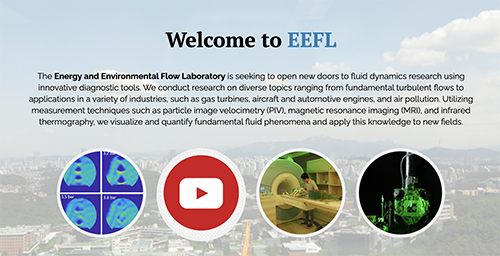
The Energy & Environmental Flow Laboratory (EEFL) investigates the fundamental mechanisms of turbulent flows through advanced flow diagnostics, aiming to develop analysis and control technologies for industrial and environmental applications.
Using advanced measurement techniques such as Magnetic Resonance Velocimetry (MRV), Particle Image Velocimetry (PIV), and infrared thermography, they visualize and quantify complex flow phenomena including gas turbine blade cooling, aerospace and automotive engine flows, and airborne particulate dispersion.
Thermal and Reactive Systems Design Laboratory
Prof. Kim, Suyong
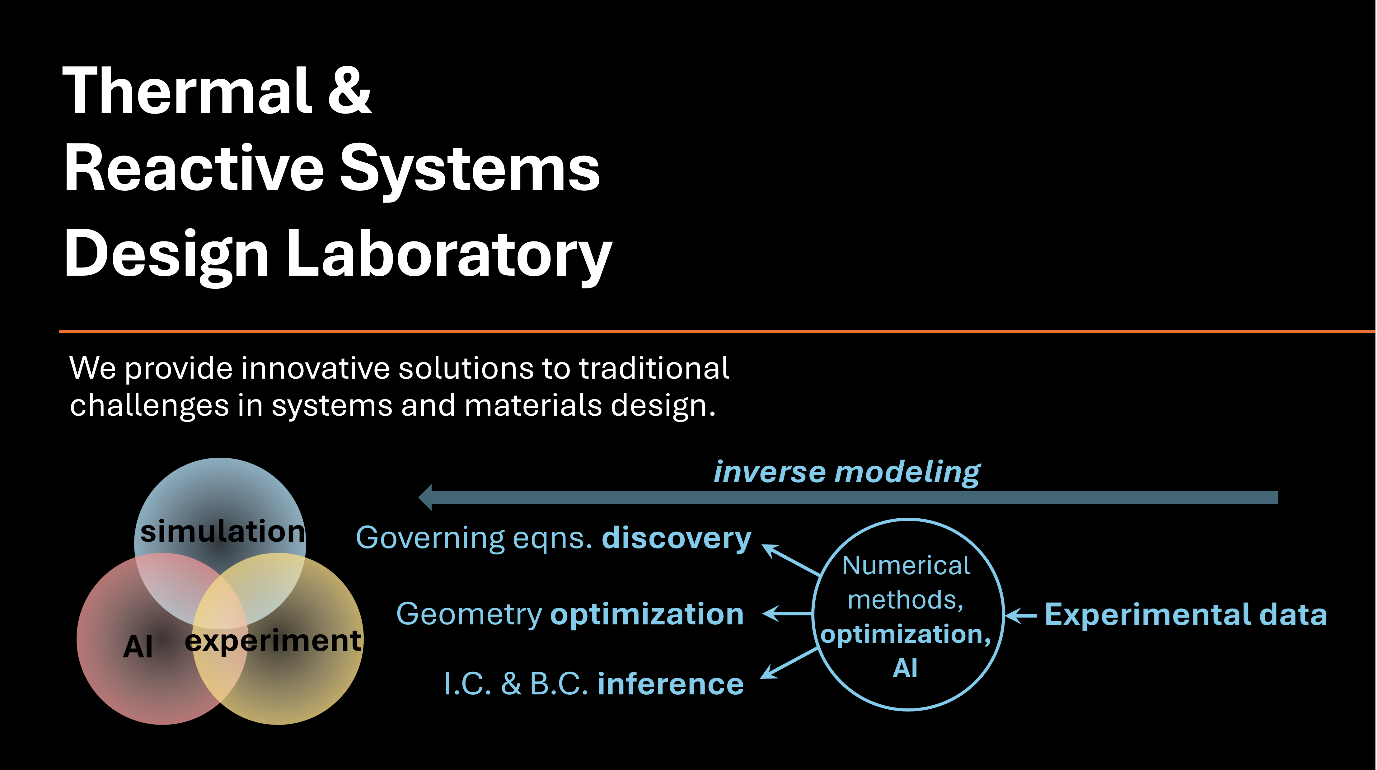
The Thermal and Reactive Systems Design Laboratory conducts research on the physical understanding and design technologies of systems where thermal transport and chemical reactions are coupled—such as energy conversion, propulsion, and thermal management systems.
Our lab aims to integrate experiments, simulations, and machine-learning methods to introduce new modeling approaches across these areas. Through this integration, we quantitatively elucidate physical phenomena that conventional analysis methods cannot capture, and we pursue a paradigm shift from empirically driven materials and system design to programmable performance design.
