
Mechanics
Research Area
Mechanics
The Mechanics Group aims to analyze the dynamic/static behavior of various structures like automobile, electric and electronics, heavy industry, steel manufacturing, and transportation from a viewpoint of mechanics, and, as a result, to optimize system design, production and operation. The state-of-the-art research thrusts include structural, vibrational, elastic wave mechanics, smart structure (piezoelectric/magnetostriction) analysis, multi-physics & multi-scale (nano, micro, macro) mechanics, health diagnosis and prognosis through contemporary techniques like advanced experiments and simulations, sensors, statistics, artificial intelligences, etc. This adds a great deal of values to engineering practices, such as improvement of weight, functional attributes, quality, reliability, and durability through shape/size/phase optimization techniques.

Hyperautonomy Artificial Intelligence Laboratory
Prof. Youn, Byeng Dong
The Hyperautonomy Artificial Intelligence Lab builds foundational technologies for industrial autonomy by fusing state-of-the-art (SOTA) AI with virtual metrology, physics-informed system modeling, and decision intelligence. Our work spans the full stack—from virtual measurement and predictive modeling to design, production, and operations—to deliver various AI agents for autonomous systems.
Our vision is to make autonomy a native property of engineered systems by embedding AI seamlessly from sensing to action.
AI-driven Simulation and Design Laboratory
Prof. Kim, Do-Nyun
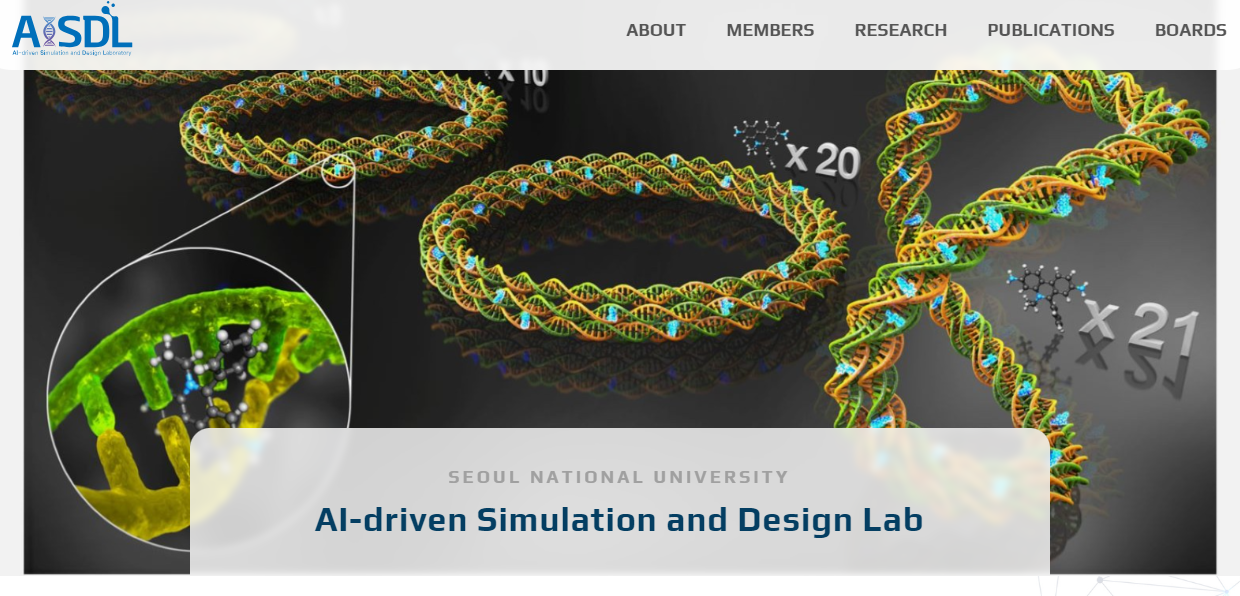
The AI-driven Simulation and Design Lab aims to quantitatively understand the complex behaviors of mechanical and biological systems and to explore innovative design principles.
Their research integrates computational analysis, optimal design, and AI-based automation technology to enhance the performance of next-generation engineering systems and to develop novel materials and structures.
The lab also studies intelligent design technologies inspired by natural structures, with applications ranging from the nanoscale to industrial products.

Transformative Architecture Laboratory
Prof. Yang, Jinkyu
The Transformative Architecture Laboratory explores the design and fabrication of advanced structural systems by integrating a wide range of disciplines, including mechanical engineering (mechanics, manufacturing, and robotics), as well as mathematics, physics, architecture, design, and data-driven modeling.
Their research aims to create structures that are not only mechanically and functionally optimized, but also aesthetically and architecturally expressive. By bridging engineering and design, the lab develops innovative solutions that respond to the evolving demands of the built environment.

MetaStructure Laboratory
Prof. Oh, Joo Hwan
The MetaStruct Lab is a multidisciplinary research group that investigates artificially engineered metastructures composed of microstructural arrays, aiming to realize unconventional mechanical properties unattainable with traditional materials.
We explore novel elastic phenomena based on nonstandard behaviors such as negative mass density and negative stiffness, and apply these principles to the design of advanced mechanical systems.
Their research integrates microstructure design, multiphysics analysis, and experimental validation to drive innovation in next-generation structures and materials.
Robotics Laboratory
Prof. Park, Frank Chongwoo
The Robotics Lab combines dynamic modeling, control, and AI-driven learning to enable precise manipulation and autonomous behavior in intelligent robotic systems.
The lab emphasizes physical interaction capabilities—such as grasping, manipulation, and motion planning—while developing machine learning and data science algorithms that allow robots to operate flexibly in complex environments. The lab’s research goal is to advance next-generation intelligent robots for applications in industrial automation, service robotics, and humanoid platforms.
Interactive & Networked Robotics Laboratory (INRoL)
Prof. Lee, Dongjun
Advanced Manufacturing and Programmable Matter Laboratory
Prof. Lee, Howon
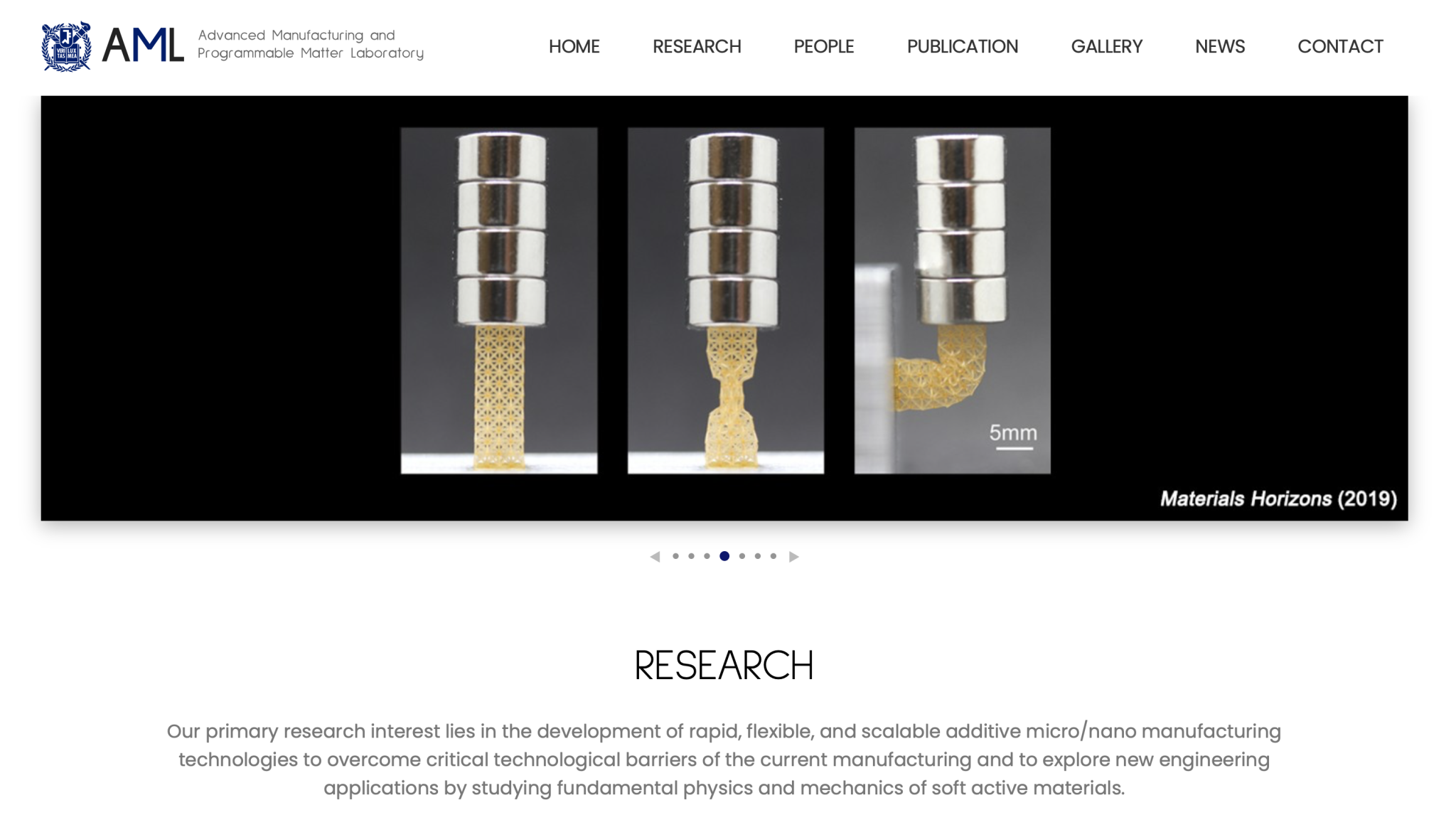
The Advanced Manufacturing and Programmable Matter Laboratory (AMP Lab) develops cutting-edge 3D printing technologies and intelligent material systems.
Our primary research interest lies in the development of rapid, flexible, and scalable additive micro/nano manufacturing technologies to overcome critical technological barriers of current manufacturing and to explore new engineering applications by studying the fundamental physics and mechanics of programmable matter.
Laboratory for living systems engineering
Prof. Shin, Yongdae
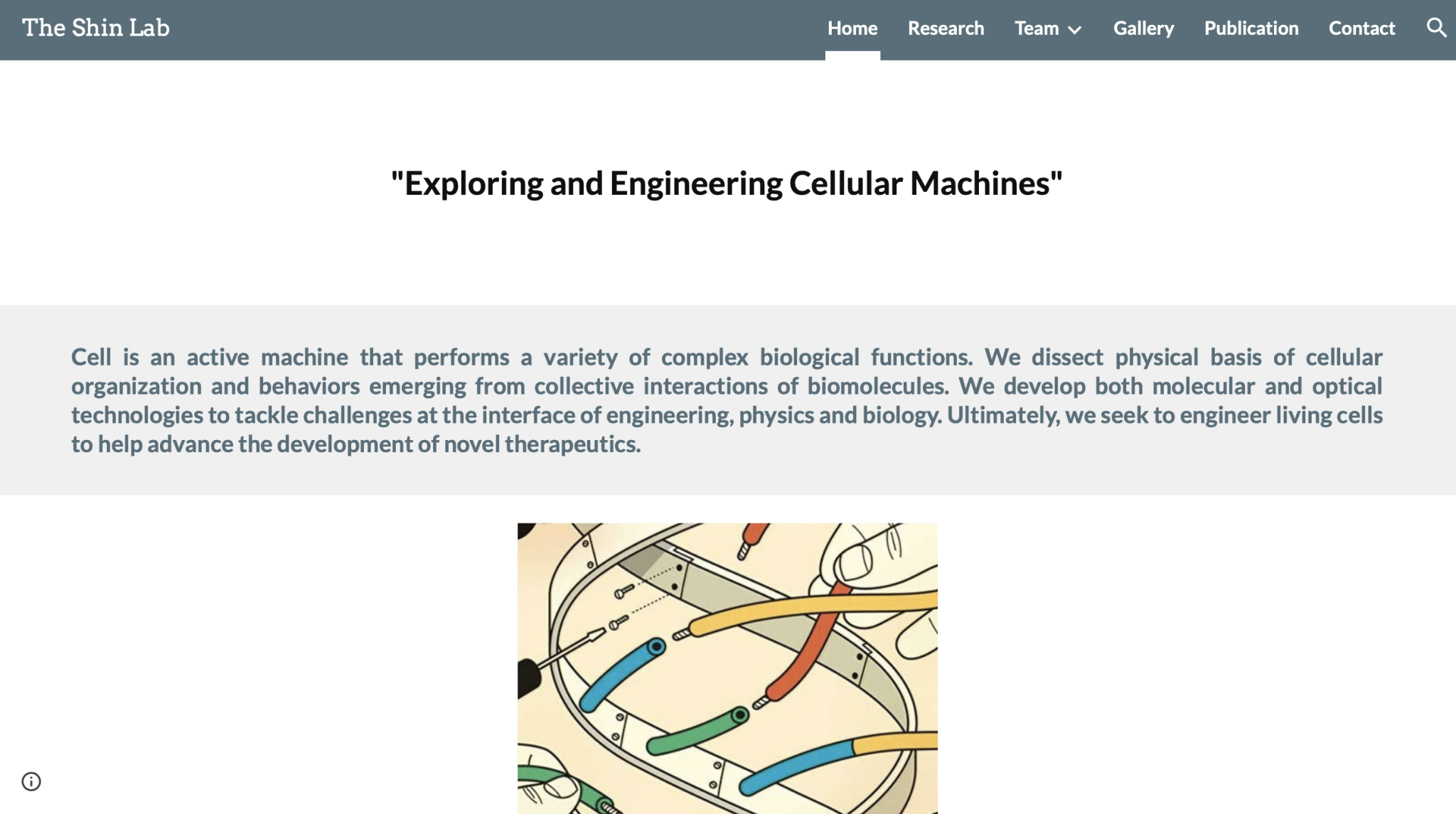
The Laboratory for Living Systems Engineering views biological systems—such as molecules, cells, and tissues—from the perspective of engineerable “living machines”, and quantitatively investigates their structures and functions based on physical principles.
By understanding the emergent interactions among biomolecules, the lab pursues a transdisciplinary approach that spans engineering, biomedical sciences, and biophysics to develop technologies for the manipulation, control, and production of living systems. In the long term, our goal is to enable the large-scale manufacturing of functional biological systems and contribute to the development of novel therapies for intractable diseases.
Precision Bioinstrumentation Lab
Prof. Kang, Joon Ho
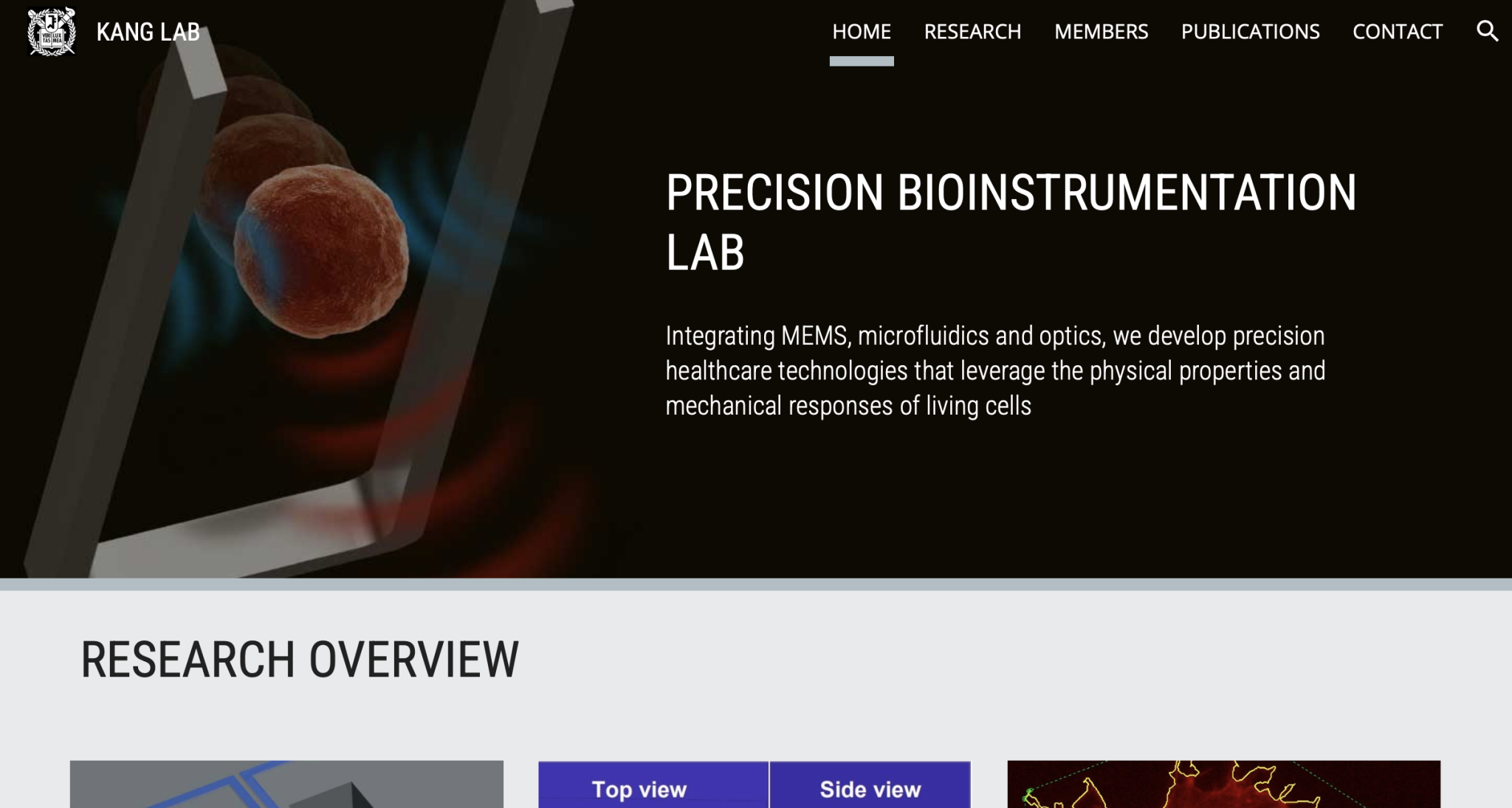
The Precision Bioinstrumentation Lab develops high-precision technologies to measure the mechanical signals and physical properties of living cells. Our goal is to translate these insights into next-generation tools for biomedical diagnostics and therapeutics.
We particularly focus on developing techniques that can quantify the mechanome—mechanical attributes such as mass, volume, stiffness, and morphology of living systems—at the single-cell level and in real time. With the growing interest in novel biological datasets—especially unprecedented high-precision measurements that conventional AI has not yet encountered—our lab responds to this emerging challenge by integrating:
1) MEMS-based biosensors, such as the Suspended Microchannel Resonator (SMR),
2) Optics-integrated microfluidic platforms, including Fluorescence Exclusion Microscopy (FXm), and
3) AI-driven analysis of single-cell morphology and mechanical signatures.
By combining these approaches, we aim to establish a new paradigm in biomechanical signal measurement—and ultimately contribute to breakthroughs in precision medicine.
